The instinct after a catastrophe is almost universal and almost always the same: gather clothes, water and supplies and send them toward the wreckage. It feels like the most direct way to help. Disaster-response specialists have spent years explaining, gently, that it is frequently the least useful thing a donor can do, and understanding why is one of the more important ideas in modern philanthropy.
The core problem is logistics. In the chaotic first days after a disaster, roads are flooded or blocked, warehouses are gone and there is often no place to store or sort an avalanche of unsolicited goods. Relief experts quoted by NPR in the aftermath of a major U.S. hurricane warned that donating products, and even services, is usually the wrong impulse, precisely because the infrastructure to receive them has itself been destroyed.
Donated goods can also do economic harm. Aid professionals have long noted that a flood of secondhand clothing and other items can undercut surviving local merchants, delaying the economic recovery that a community needs as much as it needs immediate relief. A shop that might have reopened instead competes against free goods it cannot match.
This is why specialists overwhelmingly favor cash. Money lets local responders and vetted organizations buy exactly what is needed, when it is needed, often from suppliers near the disaster, which keeps dollars circulating in the affected economy and avoids the enormous cost of trucking physical goods across the country. Cash is flexible in a way a pallet of bottled water never can be.
The institutional version of this logic shows up in how large funders now operate. The Center for Disaster Philanthropy's 2025 Annual Impact Report describes funding scores of initiatives across dozens of countries and emphasizes that effective recovery depends on sustained partnership, local leadership and long-term commitment, with unrestricted funding that lets frontline organizations adapt as conditions change. The report also highlights a transformational $60 million unrestricted gift it received in late 2025, the kind of flexible capital it argues disaster response most needs.
Scale is no substitute for staying power. Reporting compiled by the Council on Foundations on philanthropy's response to the 2025 California wildfires describes community foundations raising and distributing large sums through local nonprofit networks, channeling direct cash aid to affected residents, exactly the local-partner model experts recommend over long-distance shipments of goods.
Perhaps the hardest lesson is about timing. Donations spike while the cameras are rolling and collapse once attention moves on, yet recovery takes years. The Center for Disaster Philanthropy explicitly urges funders to keep giving after the media moves on and to direct money where and when it is most needed, rather than only in the emotional first week. For celebrities with the power to command attention, the most valuable gift may be sustaining it.
Because needs, trusted channels and recovery timelines differ with every disaster, readers should consult the Center for Disaster Philanthropy's reporting and local community-foundation guidance directly before giving.
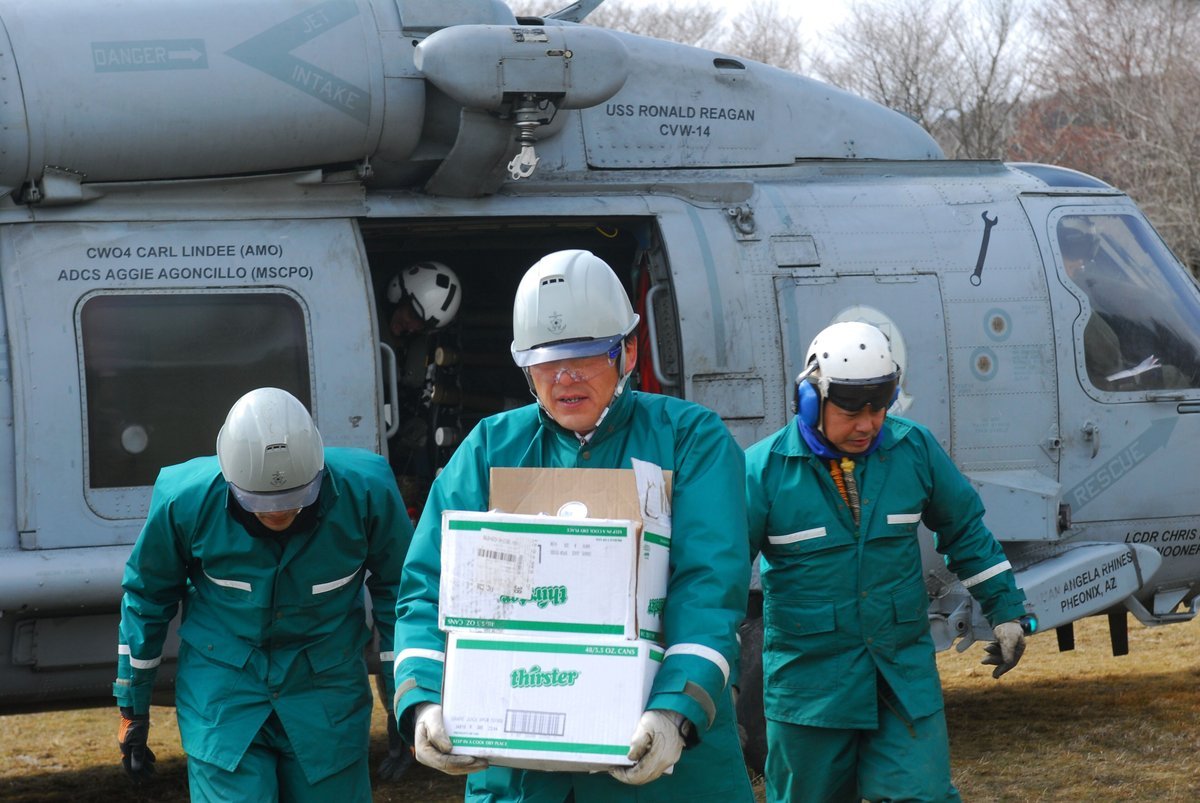
Source date: October 16, 2026. Contextual photograph; it does not depict the people or the specific event described in this article. Photo: U.S. Navy photo by Mass Communication Specialist 3rd Class Dylan McCord, Public domain ↗.
Sources & further reading
This article is editorial coverage, not an endorsement. For donations or programme participation, go directly to the organization’s official website.