If you have studied, borrowed a book, or sought medical care in Singapore, there is a reasonable chance the name Lee Kong Chian appeared somewhere along the way: on a school, a library, a university faculty, or a medical school. Behind that recurring name sits one of the country's most consequential institutions of giving, the Lee Foundation.
A fortune turned towards giving
The Lee Foundation was founded in March 1952 by the businessman and philanthropist Lee Kong Chian, who endowed it with an initial sum of S$3.5 million. It has since been described as Singapore's largest private charitable foundation, supporting education, healthcare and medical endowments, and disaster relief without regard to race, language, religion or nationality.
Lee Kong Chian (1893-1967) made his fortune in rubber and was widely known as the "Rubber King," with business interests that extended into banking and long-standing ties to the Oversea-Chinese Banking Corporation (OCBC). Accounts of his life describe a man frugal and modest in his personal habits despite his wealth, who treated his fortune as something to be given away rather than merely accumulated.
Education above all
Of all the causes the Foundation has backed, education has taken the largest share. By 2015, the Foundation had donated on the order of S$1 billion, and roughly three-quarters of that giving went to education. That emphasis reflects its founder's own conviction that learning was the surest route out of hardship, especially for disadvantaged students.
The list of landmark gifts is unusually long for a single foundation. It includes a S$150 million donation towards the medical school established jointly by Nanyang Technological University and Imperial College London, which was named the Lee Kong Chian School of Medicine in recognition of the gift.
Libraries, universities and museums
The Foundation's support for learning has left a visible mark across Singapore's institutions. It gave S$50 million in 2004 towards what became the Lee Kong Chian School of Business at Singapore Management University, and S$60 million in 2003 towards the National Library, after which the Lee Kong Chian Reference Library was named. Decades earlier, Lee Kong Chian's own giving had helped fund the earlier National Library building, making the later gift the continuation of a family relationship with the institution.
Other recorded gifts include S$30 million to the National University of Singapore in 2005 for the Lee Kong Chian Wing, and support for the Lee Kong Chian Natural History Museum, which likewise carries his name. Across these donations a pattern is clear: the Foundation has favoured enduring public institutions, the kind that serve generations of Singaporeans rather than a single moment of need.
A family stewardship
The Foundation has been run by a board drawn from Lee Kong Chian's descendants and others close to the family, continuing the work after his death in 1967. That continuity of stewardship is part of why the Foundation has remained active and substantial for more than seventy years, rather than dispersing after its founder was gone.
Its longevity also owes something to how it was structured. Rather than a one-time act of charity, the Foundation was built to keep giving over time, with its wealth channelled steadily into causes its trustees judged worthy, year after year.
The Foundation has also been notably reticent about publicising its own work, content to let the institutions it supports carry its founder's name while it stays largely out of the spotlight. That reticence is itself part of the story: for Lee Kong Chian and those who continued his work, giving appears to have been treated as an obligation to be discharged quietly, not a reputation to be burnished.
A model of quiet philanthropy
What distinguishes the Lee Foundation is not only the size of its gifts but their tenor. It has tended to give to institutions rather than to publicity, and the recurrence of the Lee Kong Chian name across schools, libraries and medical faculties is less a matter of self-promotion than of institutions choosing to honour a benefactor whose support was frequently decisive.
For a generation of Singaporeans who encounter that name without knowing the man behind it, the story is worth recovering. A rubber trader who lived modestly directed much of a vast fortune towards the country's schools, libraries and hospitals, and set up an institution to keep doing so long after he was gone. In a city shaped by public investment, the Lee Foundation stands as a reminder of how much private giving also helped build it.
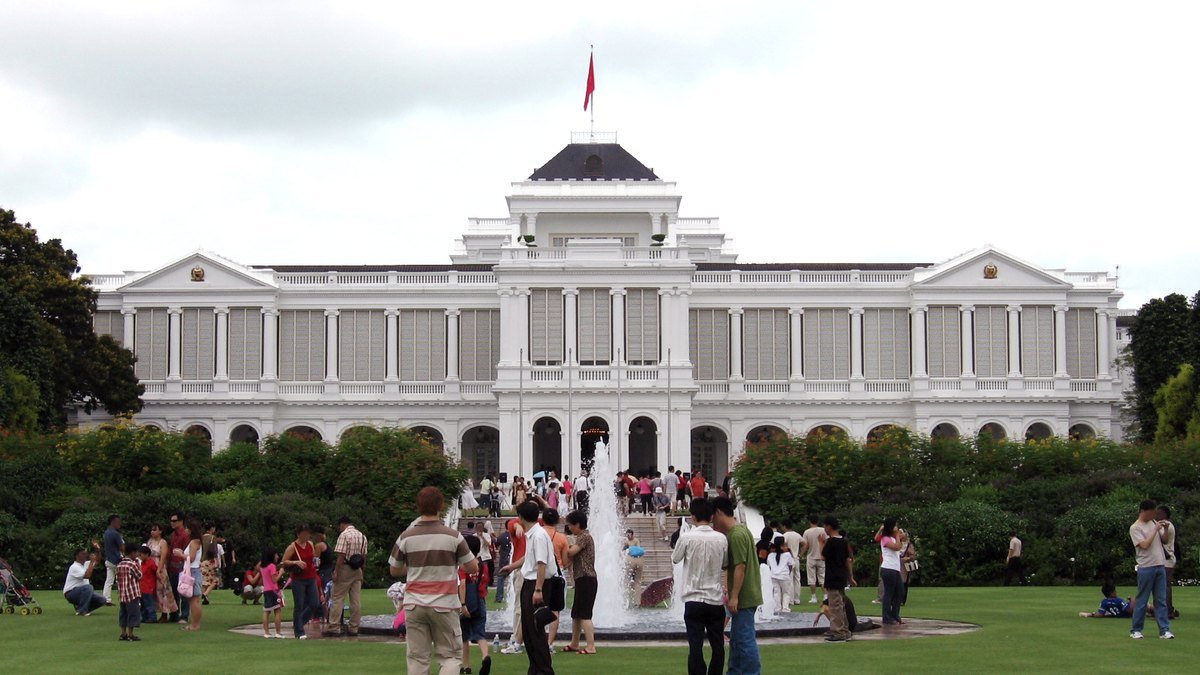
Contextual photograph; it does not depict the specific people or event described in this article. Photo: Leongyy02, CC BY-SA 4.0 ↗ via Wikimedia Commons.
Sources & further reading
This article is editorial coverage, not an endorsement. For donations or programme participation, go directly to the organization’s official website.