When a celebrity or a corporate sponsor pledges to match donations, the appeal to donors is almost irresistible: give now, and your gift instantly counts double. It is the backbone of year-end campaigns and telethon segments. But a growing body of experimental economics suggests the matching 'multiplier' behaves differently than the marketing implies, and that more generous match ratios do not necessarily raise more money.
A 2025 working paper issued by the National Bureau of Economic Research, titled 'Jackpot for Good: Can Lottery Matches Increase Charitable Giving?' and authored by Amelia Ahles, Joanna Lahey and Marco Palma, tested different matching structures in a controlled experiment. The authors confirm the core intuition, a one-to-one match meaningfully increases giving compared with no match at all, with their paper reporting a lift of roughly 16 percent relative to offering no match.
The more surprising finding concerns ratio inflation. The working paper reports that raising the match to two-to-one did not produce additional donations beyond the one-to-one level. In other words, the jump from 'no match' to 'match' does the persuasive work; sweetening the ratio further mostly spends a sponsor's money without buying extra generosity. For a donor who assumed a bigger multiplier meant a bigger effect, that is a genuine corrective.
The paper's headline idea is that matching funds can be stretched much further. The authors find that a 'lottery match,' giving the charity a small chance at a larger payout rather than a guaranteed one-to-one, can perform about as well as a standard match while using far less money, potentially letting a fixed pot of matching funds go twice as far. That reframes matching from a guaranteed subsidy into a tool whose design matters as much as its size.
Other research urges caution before treating any match as a reliable doubler. Field experiments summarized by practitioners, including work associated with the Behavioural Insights Team and natural field experiments on small matches, have produced mixed results, with some studies finding no statistically significant effect from matches in certain channels and donor populations. Context, who is being asked, through what medium, appears to shape whether a match works at all.
There is also the subtler problem of crowding out. Economists have documented that linear matching schemes can raise the total received, including the match, while partially reducing the amount donors give out of their own pockets. A campaign can advertise an impressive combined figure even as each individual's genuine contribution quietly shrinks, which means the advertised multiplier overstates the true net gain.
The takeaway for celebrity-backed campaigns is practical rather than cynical. A match is a real and useful spur, best deployed as a simple one-to-one offer with a clear deadline, and its design, including creative structures like capped or lottery matches, can make a sponsor's commitment stretch further. What it is not is a mechanical guarantee that doubling the ratio doubles the good.
Because this is an active and partly unreviewed research area, readers should consult the NBER working paper and the other cited studies directly before relying on any specific percentage.
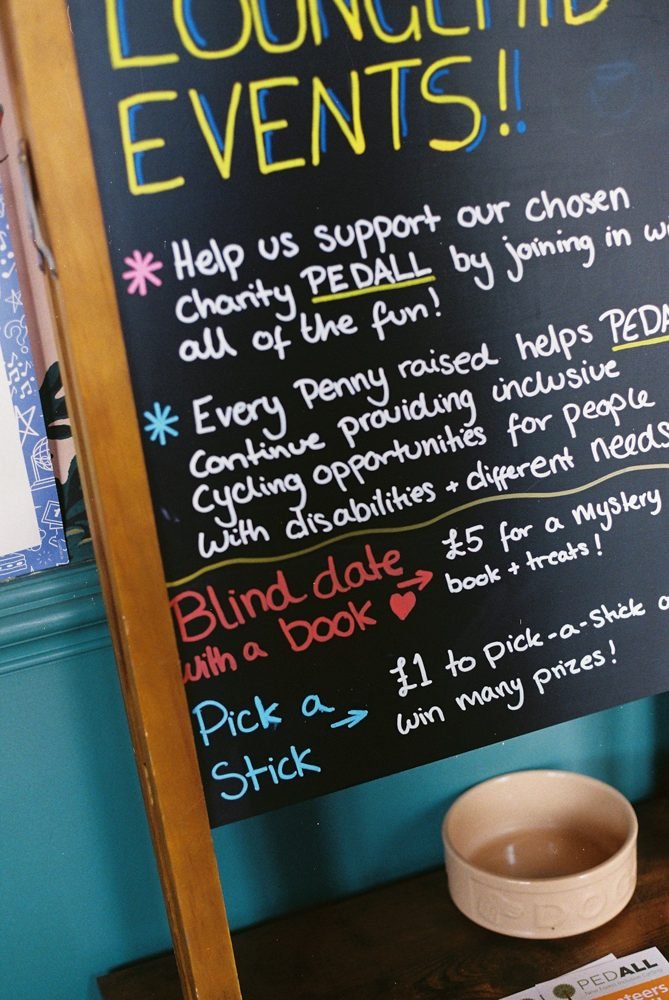
Source date: October 10, 2026. Contextual photograph; it does not depict the people or the specific event described in this article. Photo: AgnesAbah, CC0 ↗.
Sources & further reading
- National Bureau of Economic Research (Working Paper 34022) ↗
- The Behavioural Insights Team ↗
- Princeton University (research record) ↗
This article is editorial coverage, not an endorsement. For donations or programme participation, go directly to the organization’s official website.